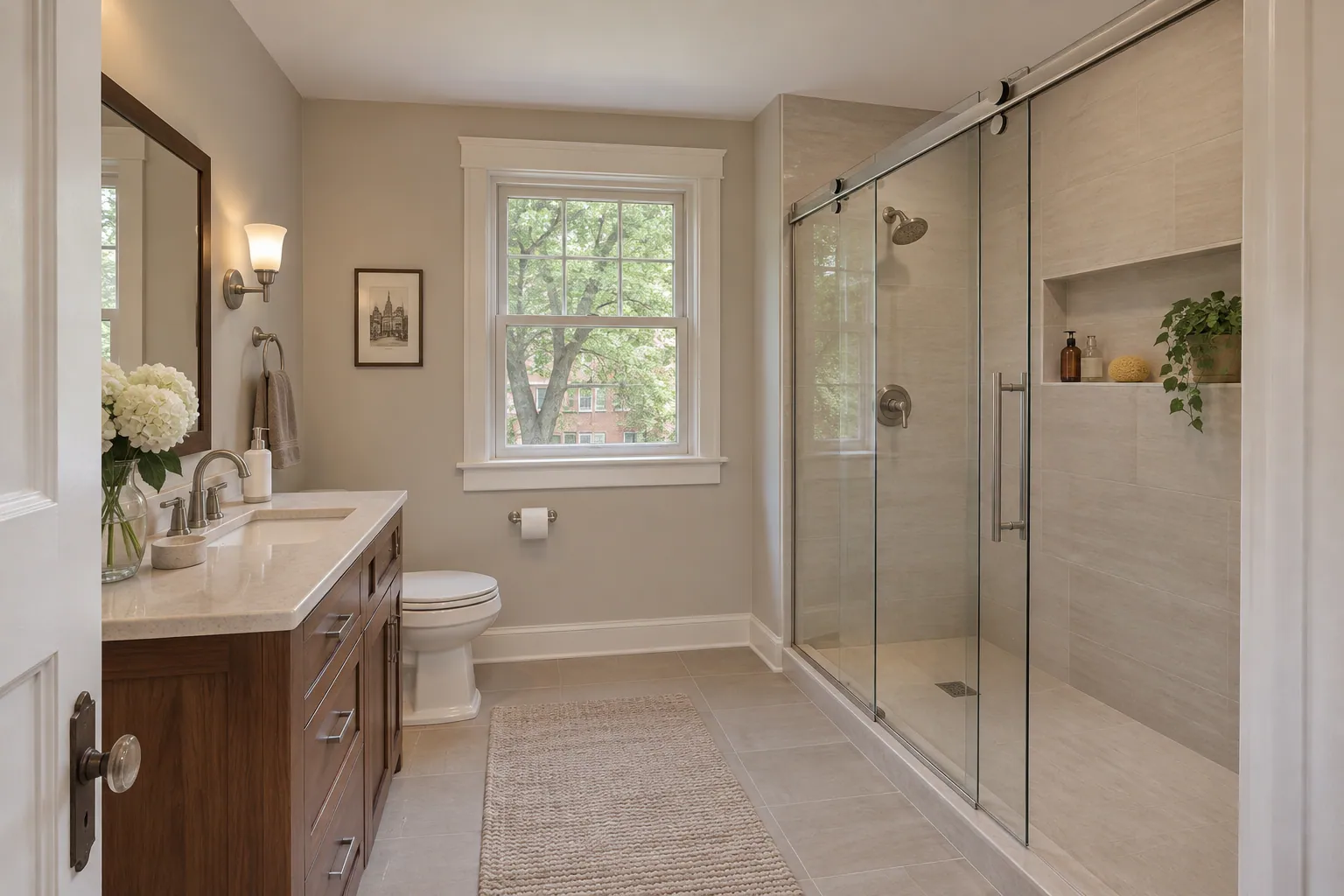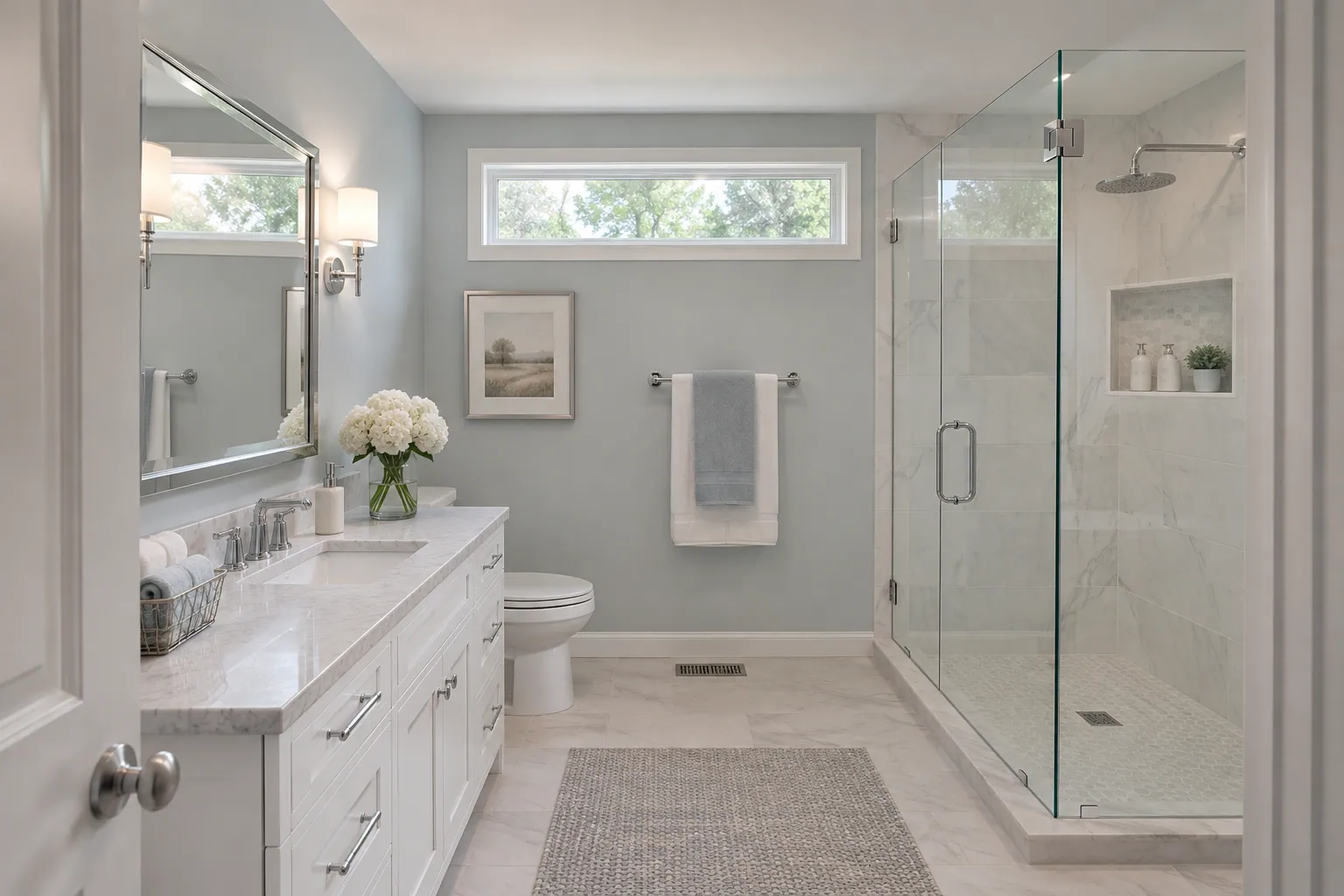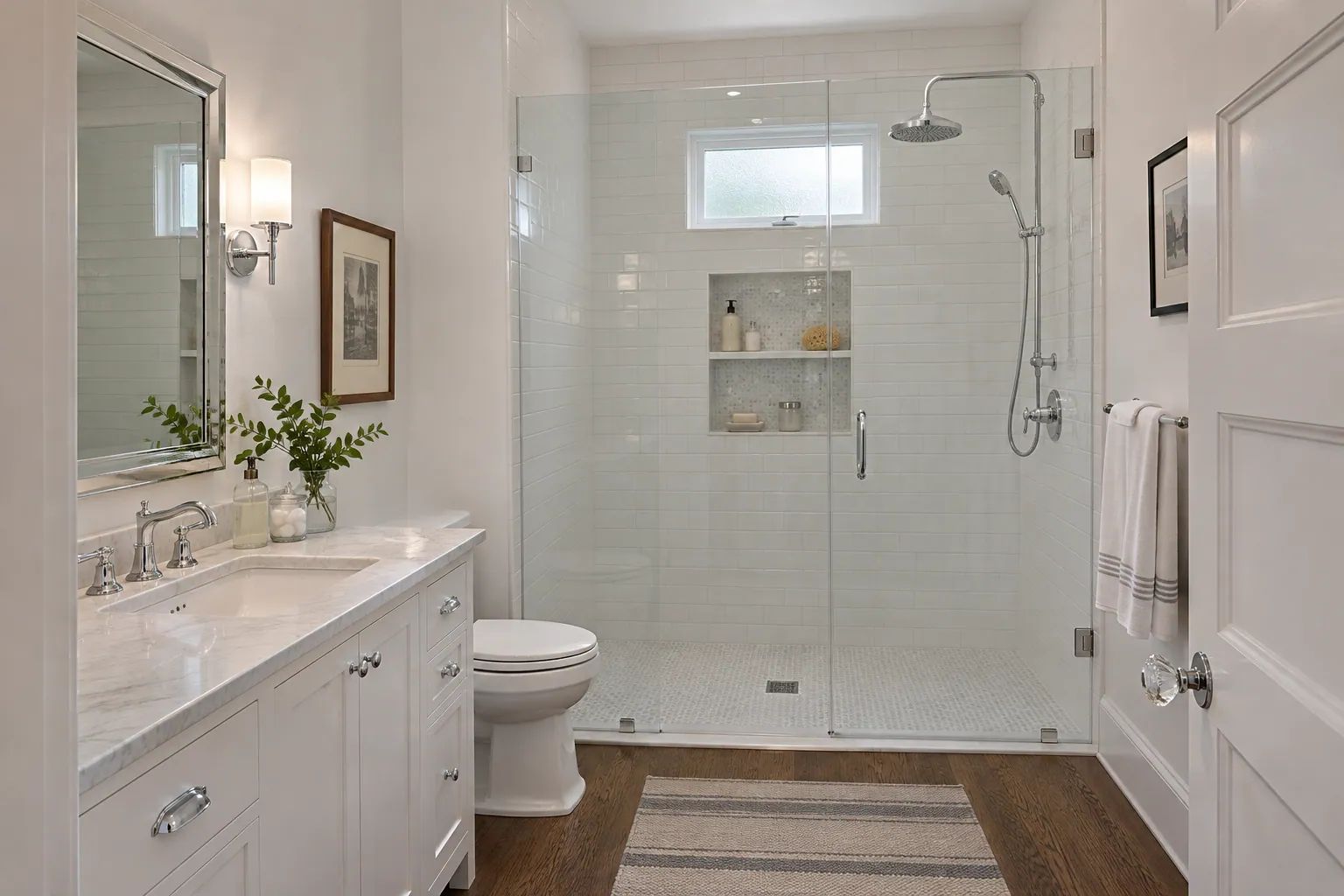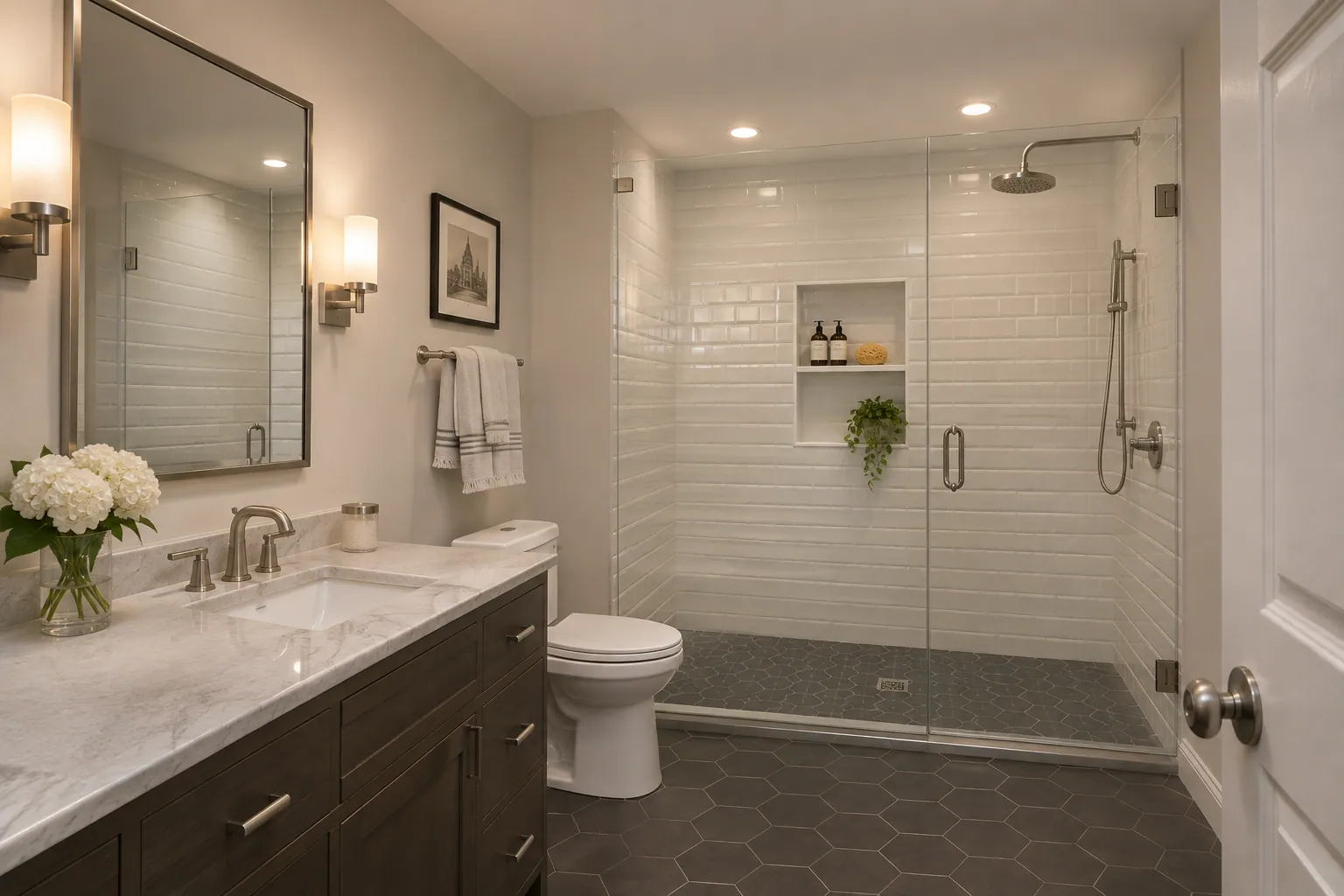
If you are researching walk in shower cost St. Louis homeowners actually pay, the honest answer is a range, and where you land depends on the shower type, the age of your house, and what is behind the walls. This guide walks through typical prices, what moves them, and how to read a quote.
Key takeaways
- Most St. Louis walk-in shower projects typically land between about $6,000 and $25,000, depending on materials and how much of the bathroom changes.
- Acrylic or solid-surface systems are usually the fastest and most affordable route. Custom tile costs more and takes longer.
- Older homes can add cost through drain lines, subfloor repairs, and plaster or tile removal. A good quote accounts for these up front.
- Only the written, measured quote matters. Any range you read online, including this one, is a starting point.
The short answer on price
Most walk-in shower projects in the St. Louis area typically land between $6,000 and $25,000. That is a wide spread, and it should be. A one-day conversion of a standard tub into a shower with an acrylic base and wall panels is a very different job from a tiled, curbless shower with a rebuilt floor.
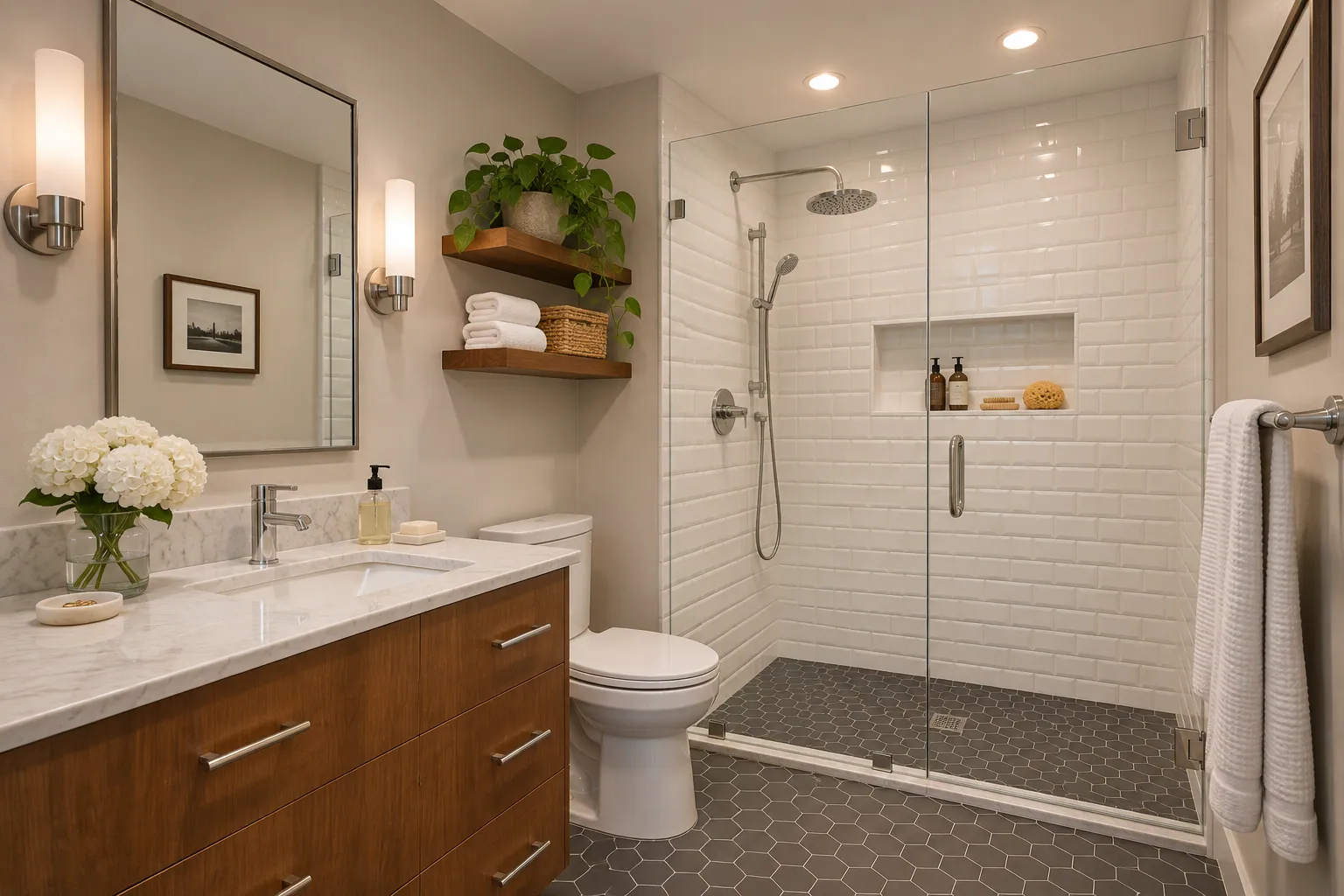
The low end usually means a prefabricated base, wall panels, a standard valve and showerhead, and a straightforward drain location. The high end usually means custom tile, a built-in bench or niche, a frameless glass enclosure, and some framing or plumbing changes.
These are typical ranges, not promises. Your written quote, based on measurements of your actual bathroom, is the number that counts.
Walk in shower cost in St. Louis by type of build
Four kinds of projects cover most of what homeowners ask us about. Each has its own typical price band and schedule.
A tub-to-shower conversion with an acrylic or solid-surface base and wall system is the most common. It reuses the footprint of the old tub, usually the 60-inch alcove in a hall bath, and most are installed in one to two days. Typical cost runs from about $6,000 to $12,000.
A low-threshold shower with a solid-surface or acrylic base and a very short step-over is a popular choice for people who want easier entry without a full rebuild. Most projects land between about $8,000 and $16,000 depending on glass, grab bars, and wall material.
A tiled walk-in shower within the existing footprint takes longer because of waterproofing, curing, and tile work. Expect roughly $12,000 to $25,000 and one to two weeks. A fully curbless tiled shower with floor framing changes, often part of a larger remodel, can run $18,000 to $35,000 or more.
Typical St. Louis walk-in shower cost by project type
| Project type | Typical range | Typical schedule | Good fit for |
|---|---|---|---|
| Tub-to-shower conversion, acrylic base and walls | $6,000 to $12,000 | 1 to 2 days | Hall baths, 60-inch tub alcoves, fast turnaround |
| Low-threshold shower, solid-surface or acrylic | $8,000 to $16,000 | 1 to 2 days | Easier entry without a floor rebuild |
| Tiled walk-in shower, existing footprint | $12,000 to $25,000 | 1 to 2 weeks | Custom look, benches, niches |
| Curbless tiled shower with framing changes | $18,000 to $35,000 or more | 2 to 4 weeks | Full remodels, aging-in-place plans |
What drives the price up or down
Two showers that look alike in a catalog can price very differently once someone measures your bathroom. These are the factors that move the number most.
- Wall material: acrylic panels cost less than solid surface, and both usually cost less than custom tile with labor-heavy setting and grout.
- Size and shape: a standard 60x30 or 60x32 footprint is the easiest. Larger or custom shapes mean custom pans or tile work.
- Drain location and plumbing: moving a drain or valve adds labor. Keeping them where they are keeps cost down.
- Glass: a simple sliding door or a fixed panel costs less than a frameless enclosure.
- Fixtures and extras: benches, niches, handheld sprays, grab bars, and thermostatic valves each add to the total.
- Repairs hidden behind the old tub or tile: more on this below.
What older St. Louis houses tend to hide
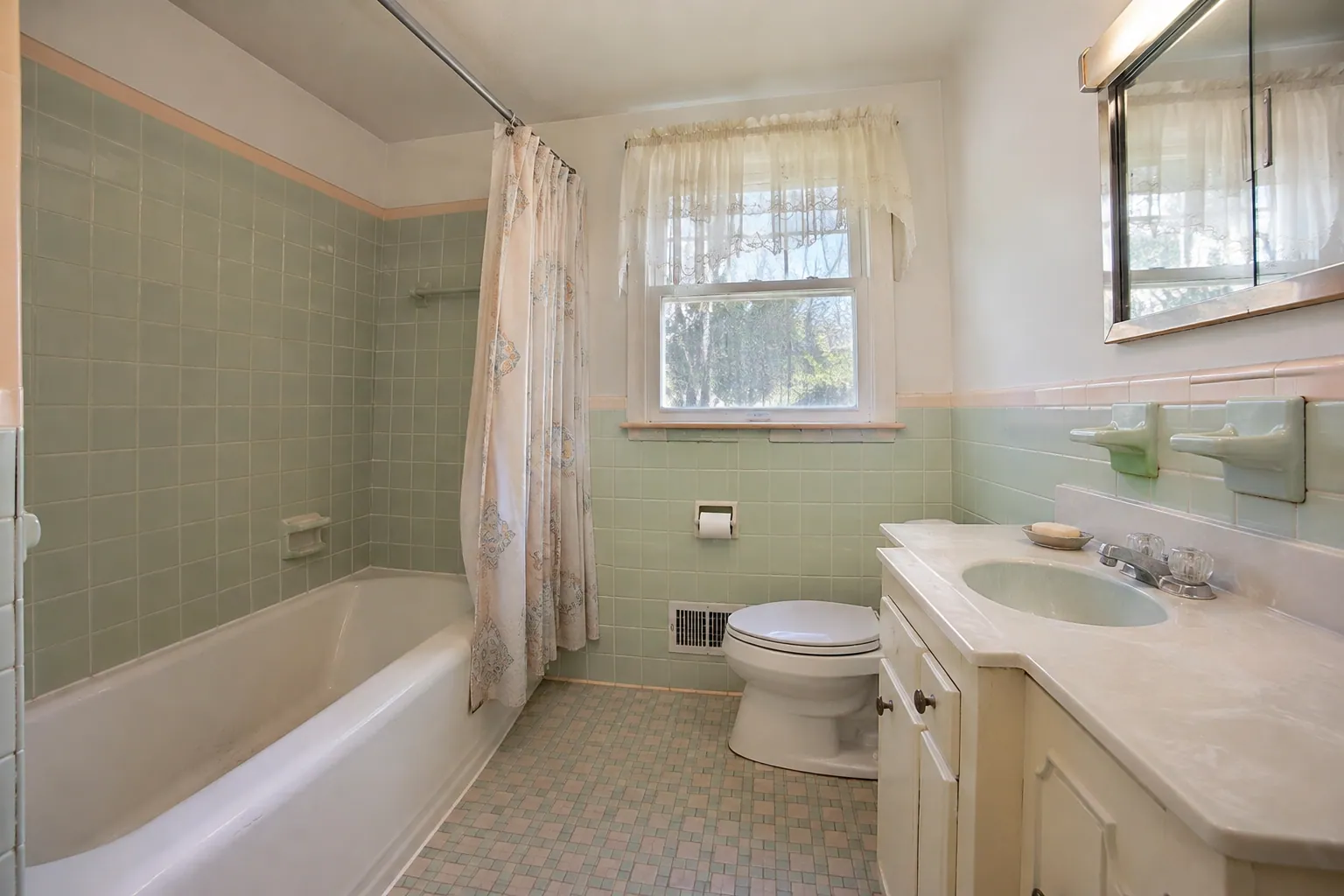
Brick bungalows, 1950s ranches, and split-levels across the city, the county, St. Charles, Jefferson County, and the Metro East were built to last, but original bathrooms are now 50 to 80 years old. That age shows up once the old tub or tile comes out.
Drain lines are the first thing we check. Cast-iron stacks can be sound for decades, but they can also be corroded or cracked at the tub connection, and older galvanized supply lines can be restricted by mineral buildup. Missouri water is hard, and it leaves scale inside pipes and on valves. Replacing a corroded section while the wall is open costs far less than doing it later.
Walls and floors matter too. Original plaster over lath, or tile set in a thick mortar bed, takes more labor to remove than modern drywall. Where a leaking tub surround or caulk line has let water sit, you may find soft subfloor or mold behind the wall. Humid summers and cold exterior walls in winter make this common in bathrooms with poor ventilation.
None of this means your project will go badly. It means a quote should leave room for it, and a good installer will show you what they find and explain the options before any extra work is done.
Acrylic, solid surface, or tile
Acrylic wall and base systems are the budget-friendly, fast option. They are one piece or a few large panels, so there are very few grout lines to clean, which matters in a humid climate where mildew likes grout. They go in quickly, often in a single day.
Solid-surface systems cost more but feel more substantial, look closer to stone, and offer more options in color and trim. They are a good fit when you want a cleaner, more finished look without the schedule of tile.
Custom tile gives you the most design freedom and the most expensive labor. It also needs more time for waterproofing and curing. If you love tile, it is worth the cost. If you just want a safe, easy-to-clean shower that works for the next 20 years, a good wall system usually does the job for less.
Low-threshold and curbless showers
Many of the people we work with want to stop stepping over a tub wall. A low-threshold shower, with a step of an inch or two, is often the simplest fix. It can use a prefabricated base and does not require changes to the floor structure.
A true curbless shower is different. The shower floor has to sit lower than the bathroom floor so water slopes toward the drain. In a house with a slab, or with 2x8 or 2x10 joists in a 1950s ranch, that may mean recessing the floor, notching framing, or building up the bathroom floor. That adds cost and time, and it is worth a careful look before you commit.
If accessibility is the goal, ask about grab bar blocking, a bench, and a handheld spray at the same time. Adding them during the install costs less than coming back later.
Permits, schedule, and reading a quote
Permit requirements depend on where you live. St. Louis County, the City of St. Louis, and individual municipalities each have their own rules, and Metro East communities in Illinois have theirs. A straightforward replacement in the same footprint often needs less than a project that moves plumbing or framing, but your contractor should tell you what applies and handle it when required.
Most shower and bath replacements are installed in one to two days. Full remodels with tile, vanities, and layout changes typically take two to four weeks. Ask for the schedule in writing, along with what is included and what is not.
When you compare quotes, line up the same things: base and wall material, glass, valve and fixtures, demolition and disposal, drain and plumbing work, wall repair, permits, and warranty terms. A lower number that leaves out disposal or wall repair is not really lower.
The bottom line
If you are weighing a walk-in shower, the easiest next step is a free design visit, either in your home or by video. We measure the bathroom, look at the tub, walls, and drain location, talk through how you use the space, and give you a written quote you can compare with any other. There is no pressure to decide that day. Many homeowners just want to know what is realistic for their house before they commit to anything, and that is a perfectly good reason to call.