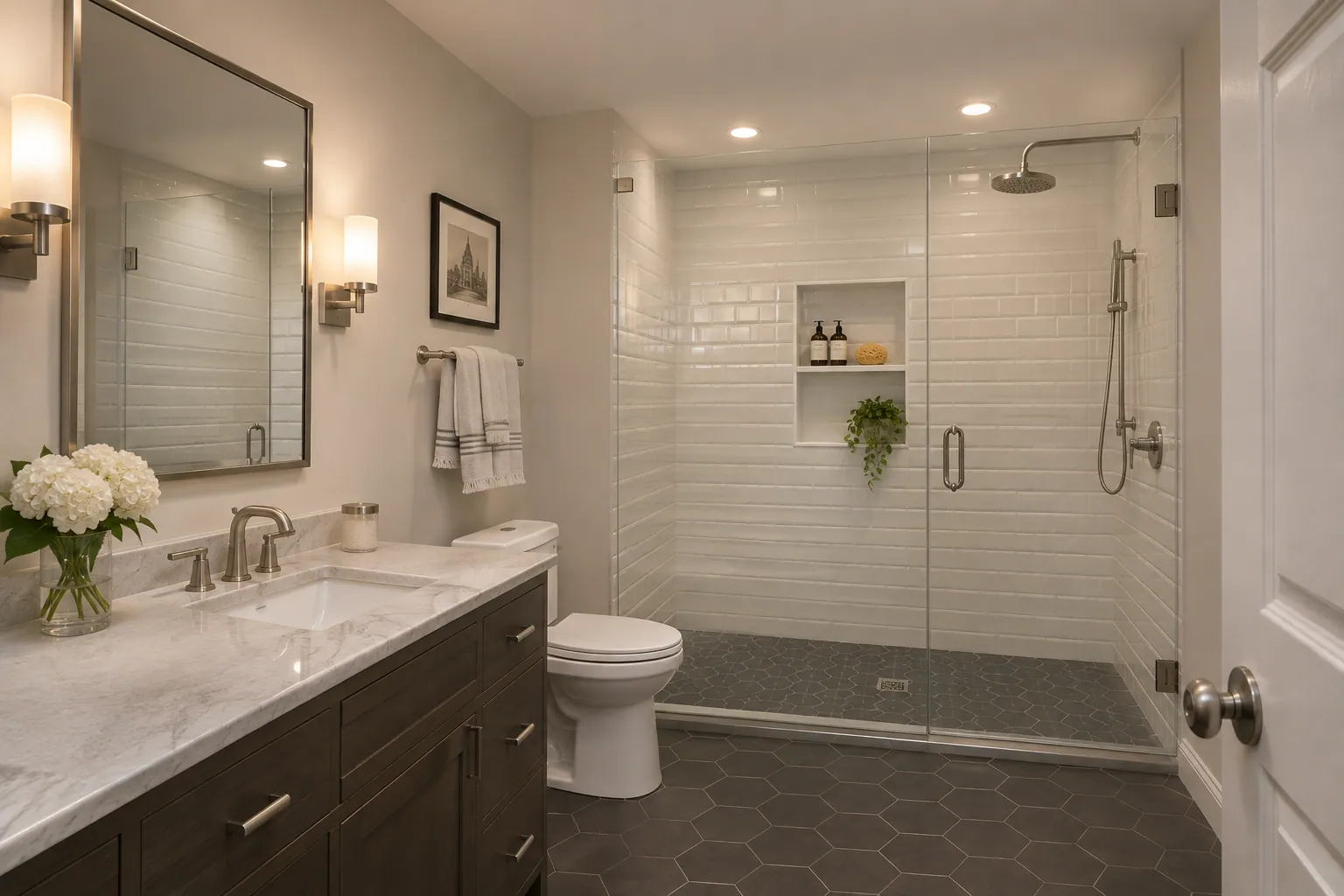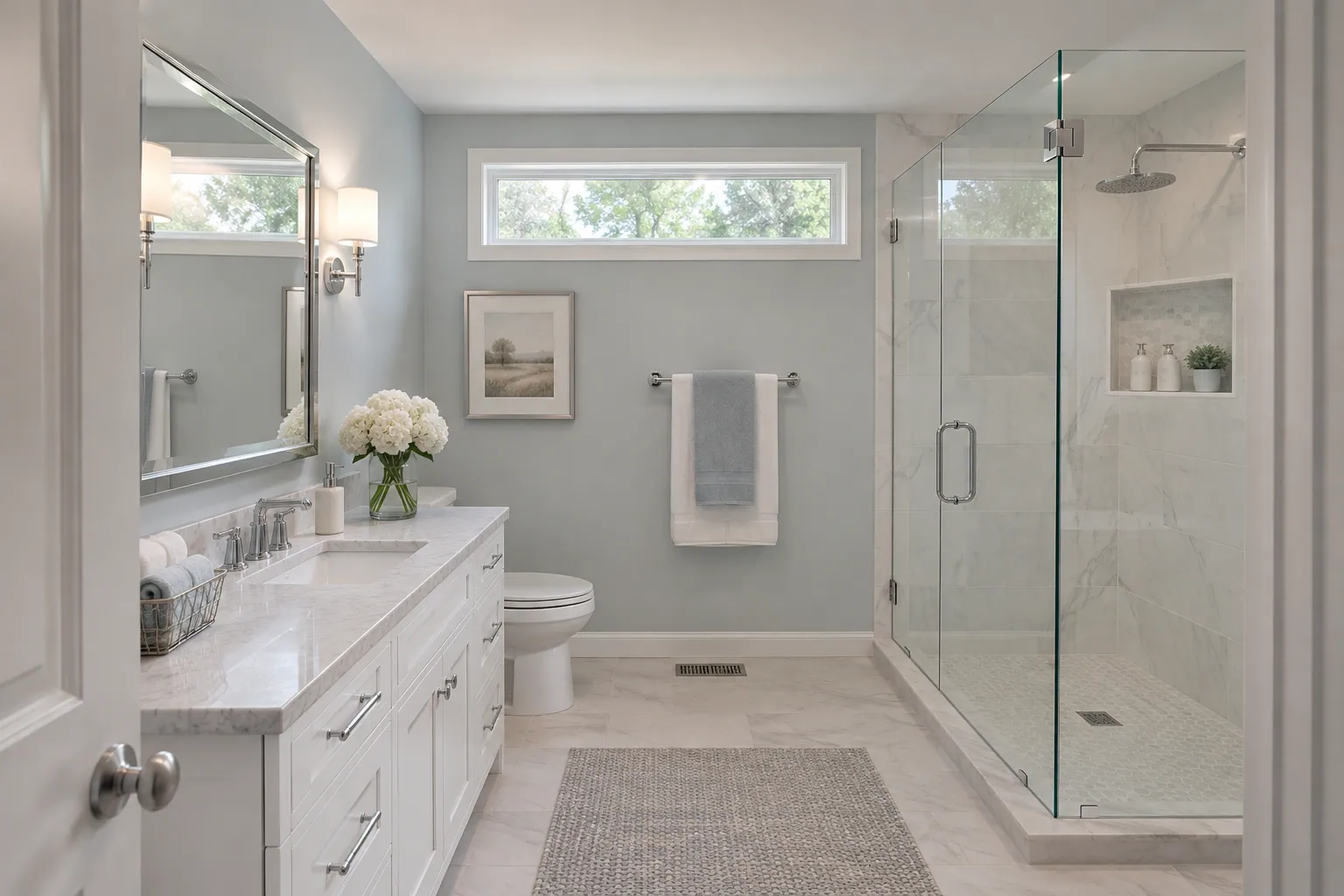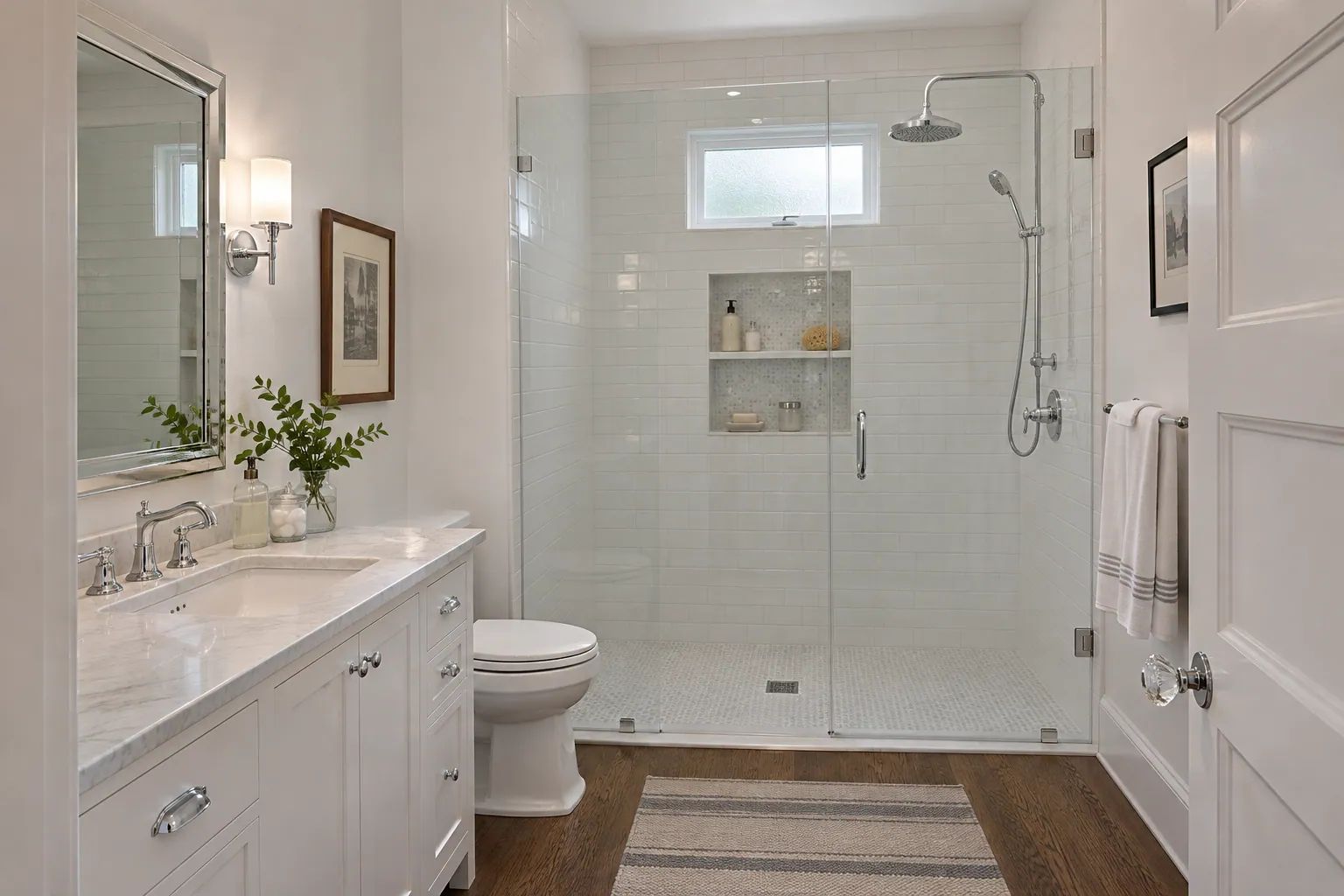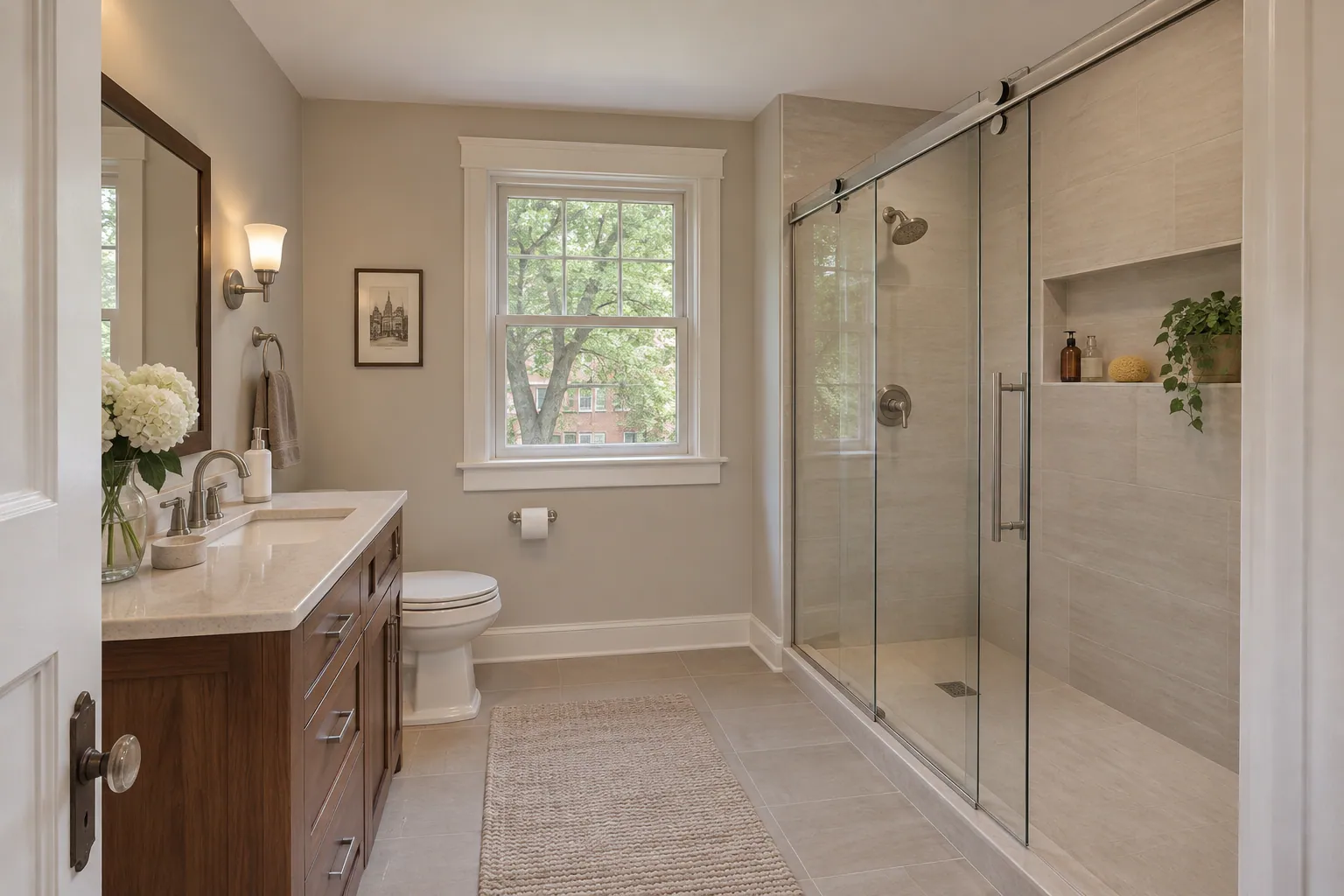
Most homeowners ask about price before anything else, and that is a fair place to start. This guide covers what tub-to-shower conversions typically run in the St. Louis area, what moves the number up or down, and what to look for in a written quote.
Key takeaways
- Most acrylic or solid-surface tub-to-shower conversions in St. Louis typically land between about $5,500 and $12,000, and custom tile work usually runs higher.
- The wall material and shower base matter, but hidden conditions in older homes (drain lines, subfloor, plaster) often decide the final price.
- Only a measured written quote tells you your real number. Ranges are for planning, not budgeting to the dollar.
- A conversion that keeps the tub's footprint is usually finished in 1 to 2 days with a wall system, and 1 to 2 weeks with tile.
What most tub-to-shower conversions cost here
Tub to shower conversion cost in St. Louis varies mostly by the materials you pick and by what we find behind the old tub. For a standard 60-inch tub space, most projects with an acrylic or solid-surface wall system and a new shower base typically land between $5,500 and $12,000. Custom tile showers more often fall between $9,000 and $20,000 or more.
Those are planning ranges, not promises. Your written quote is what counts, and it should be based on measurements taken in your bathroom, not a phone guess. Anyone who gives you a firm price without seeing the space is guessing.
What drives tub to shower conversion cost in St. Louis
Five things account for most of the difference between a lower quote and a higher one. Knowing them helps you compare bids fairly.
The first is the wall material. Acrylic and solid-surface panels cost less to buy and install, and they have few grout lines to clean. Tile costs more in materials and in labor because of waterproofing, setting time, and grout work.
- Wall material: acrylic, solid surface, or tile
- Shower base: standard threshold, low-threshold, or curbless
- Plumbing work: new valve, drain relocation, or pipe repair
- Fixtures and extras: niches, grab bars, bench seat, glass door, handheld sprayer
- Condition behind the walls: rot, old waterproofing, or plaster damage
Typical St. Louis tub-to-shower conversion ranges
| Conversion type | Typical range | Typical install time | Good fit for |
|---|---|---|---|
| Acrylic wall system, standard base | $5,500 to $9,000 | 1 to 2 days | Hall baths, budget-minded upgrades |
| Solid-surface walls, low-threshold base | $7,500 to $12,000 | 1 to 2 days | Easier entry, low-maintenance walls |
| Tile walls, standard or low-threshold base | $9,000 to $16,000 | 1 to 2 weeks | Custom look, niches, benches |
| Curbless or large custom tile shower | $14,000 to $22,000 or more | 2 to 3 weeks | Accessible design, bigger layouts |
| Added drain relocation or subfloor repair | Often $800 to $3,000 or more | Adds a day or more | Older homes with hidden issues |
Wall systems versus tile
Most of our one- and two-day work uses a wall system, because it goes in fast and gives a clean, durable surface. Panels are cut to fit your space, bonded to the wall, and sealed at the corners, so there is very little to maintain. In a St. Louis home with humid summers, fewer grout lines also means less to scrub and less to mildew.
Tile is a good choice when you want a specific look, a custom niche, or a larger shower. It takes longer because each layer has to cure, and the price reflects that. Done properly, tile lasts for decades, but it depends on the waterproofing behind it, which is the part you never see.
Hard Missouri water is a factor with either choice. Mineral buildup shows up on glass, fixtures, and grout. Smooth solid-surface walls are easy to wipe down, while tile and grout need regular sealing and cleaning.
What older St. Louis homes add to the price
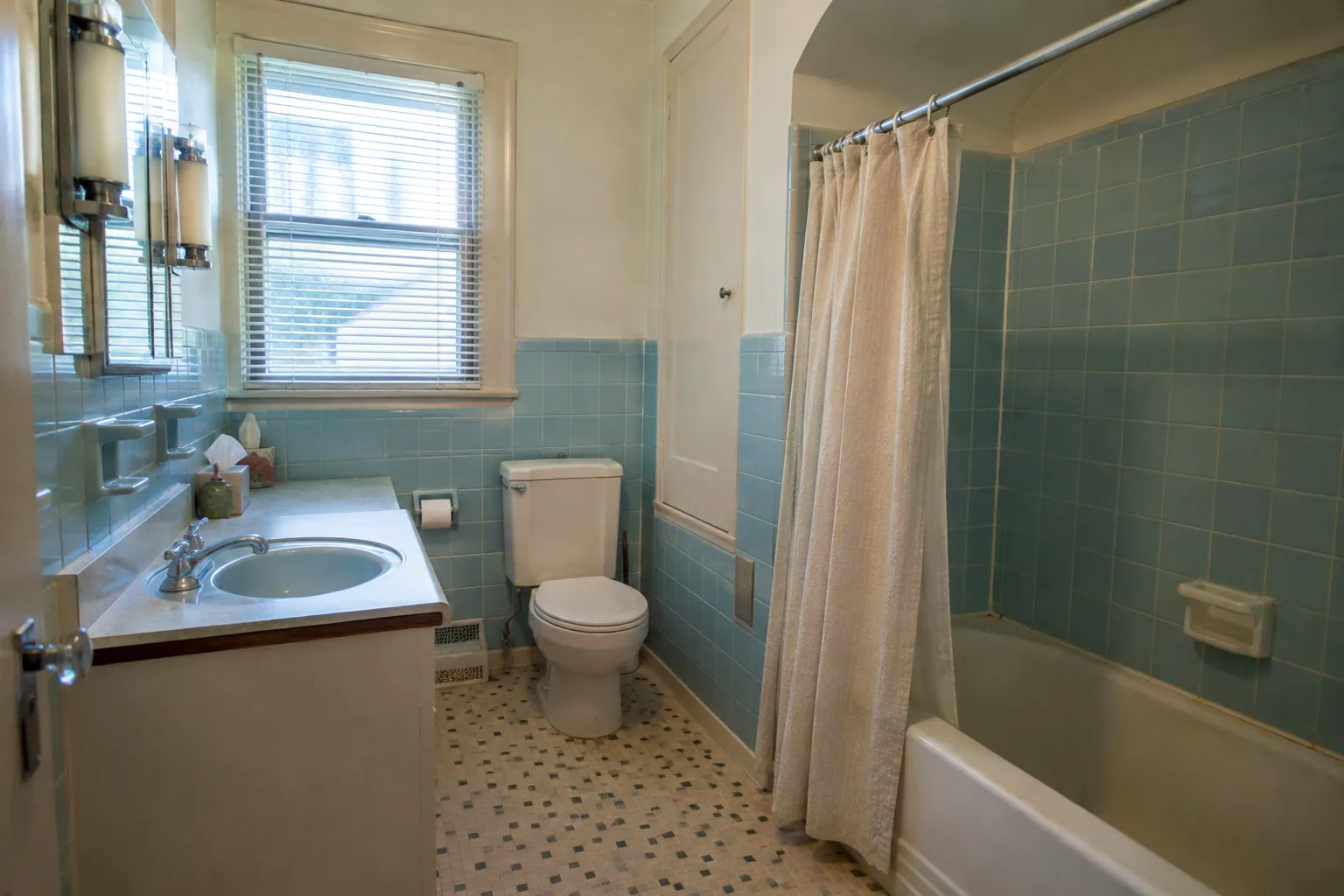
Many of the homes we work in are 1940s to 1970s brick bungalows, ranches, and split-levels. The bathrooms are often a 5x8 hall bath with the original cast-iron tub and tile. That layout is a good candidate for a conversion, but it comes with a few things worth knowing before the quote arrives.
Pulling a cast-iron tub is heavy work. Many weigh over 300 pounds, and getting one out of a second-floor bath or down a narrow hallway takes extra hands and care. Behind the tub wall we sometimes find plaster over lath, which has to be handled differently than drywall.
Drain lines matter too. Cast-iron and galvanized lines from this era can be corroded or partly blocked, and a conversion is the easiest time to address them while the floor is open. If the shower drain needs to move from the tub's end-drain position to a center spot, expect added plumbing and floor work.
Water damage is the other common surprise. A leaky tub spout or failed caulk line over many years can soften the subfloor or framing. We cannot always see it until the tub is out, which is why a good quote explains how repairs of that kind are handled and priced.
- Heavy cast-iron tub removal, especially upstairs or in tight halls
- Plaster walls that need careful cutting and patching
- Corroded cast-iron or galvanized drain and supply lines
- Rotted subfloor or framing from long-term leaks
- Cold exterior walls that may need insulation and vapor attention
Shower base choices and how they affect price
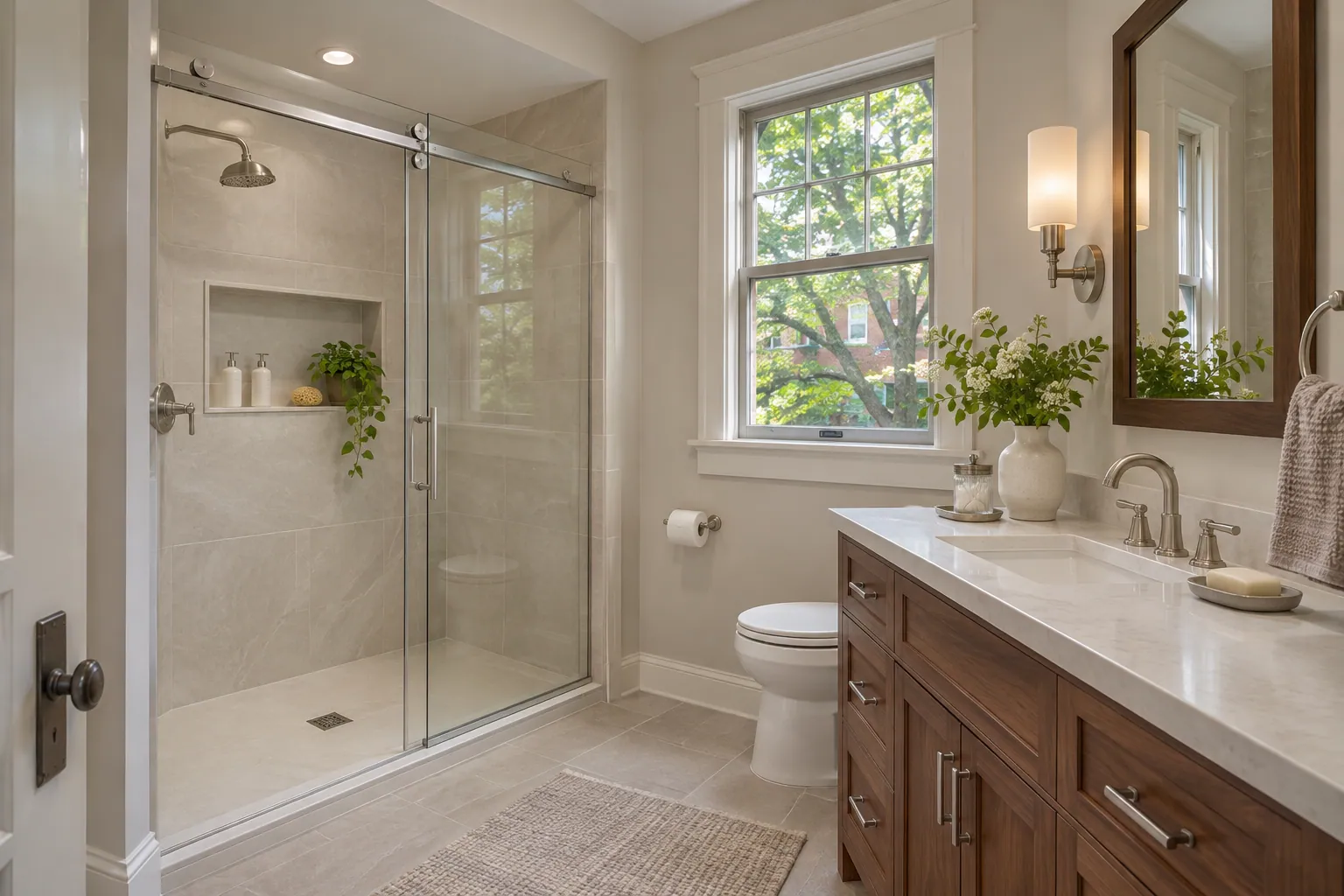
The base is where a tub-to-shower conversion becomes a safer and more usable shower. A standard base with a low curb is the most economical option and works well in most hall baths. A low-threshold base keeps the step-in height down to an inch or two, which helps with balance and mobility.
A fully curbless shower costs more because the floor often has to be recessed and sloped, and that is a bigger job in a slab or a framed floor with tight joists. For many of our homeowners, a low-threshold base gives most of the benefit at a more reasonable cost.
If you are thinking about staying in your home for the long run, tell us up front. Adding blocking in the walls for grab bars, a bench seat, and a handheld sprayer are inexpensive to plan in now and expensive to add later.
Typical price ranges by conversion type
The table below shows typical ranges for a standard-size tub space in the St. Louis area. Treat it as a starting point. Your written quote reflects your bathroom, your materials, and any repairs.
Permits, timeline, and what the quote should include
Permit requirements depend on the scope and on where you live. St. Louis City, St. Louis County, and many municipalities handle them differently, and changing plumbing locations is more likely to require one than a straight swap. Your installer should tell you what applies and handle it where required.
Timing is simple for wall-system conversions: most are installed in 1 to 2 days once materials are in. Tile conversions typically take about a week or two. If the project grows into a full remodel with a new vanity, flooring, and layout changes, plan on roughly 2 to 4 weeks.
A solid written quote lists the wall and base materials by name, the fixtures and valve, demolition and disposal, any plumbing changes, and how hidden damage will be handled if it turns up. It should also name who does the work. Our installs are done by licensed and insured local installers.
Ways to keep the cost reasonable
Keep the drain where it is when you can. Moving it is one of the bigger swing items in a hall bath. Choose a wall system over custom tile unless you really want the tile look, and pick a standard-size base rather than a custom size.
Do the practical extras now, though, while the walls are open. Grab bar blocking, a better valve, and a fix for a bad drain are small now and costly later. Spending a little on those usually beats spending on decoration.
Finally, get at least one design visit with real measurements, in your home or by video. Compare quotes line by line, not by the bottom number alone, because two bids that look close can cover very different work.
The bottom line
If you are weighing a tub-to-shower conversion, the easiest next step is a free design visit. We can come to your home or meet by video, measure the space, look at your tub, walls, and drain location, and talk through wall system and base options. You will get a written quote that lists materials and scope plainly, so you can compare it with any other bid. There is no pressure to decide that day. Many homeowners take a week or two, and that is a perfectly reasonable way to make a decision.