
If you are weighing bathtub refinishing vs replacement St. Louis homes often force the question, because so many of our tubs are 50 to 80 years old. Refinishing is cheaper and quick, and replacement lasts longer and fixes more. Here is how to tell which one fits your tub, your walls and your budget.
Key takeaways
- Refinishing fixes the surface of a sound tub. It does not fix leaks, soft floors, bad drains or worn-out walls.
- Replacement typically costs several times more than refinishing, but it lets you address the plumbing and walls behind the tub.
- A heavy cast-iron tub in good shape is often worth refinishing. A cracked, rusted-through or leaking tub is not.
- Ask for a written quote on either option so you are comparing the same scope.
Bathtub refinishing vs replacement St. Louis: how to decide
Most homeowners we talk to are not trying to pick the fanciest option. They have a tub that looks tired, maybe stained or chipped, and they want to know whether a cheaper fix is a smart move or just a delay.
The honest answer depends on three things: the condition of the tub itself, the condition of everything around it, and how long you plan to stay in the house. If the tub is solid and the walls and plumbing are fine, refinishing can be a sensible choice. If there is any sign of water damage or you want a different kind of bathing space, replacement usually saves money in the long run.
A quick note on our own view. We install replacement tubs, showers and full remodels, so we lean toward replacement when it is warranted. We will also tell you when a refinish is the better use of your money.
What refinishing actually does
Refinishing, sometimes called resurfacing or reglazing, means cleaning and etching the existing tub, repairing small chips, and spraying on a new coating. The tub stays in place. Nothing behind the wall or under the floor is touched.
That makes it fast, typically a day of work plus a cure time before you can use the tub. It also makes it limited. A coating can make a dull, stained or outdated finish look clean and bright, but it is only as good as the surface and the prep underneath it.
Refinishing can handle:
- Dull, stained or worn enamel on a tub that is otherwise sound
- Small chips and rust spots at the surface
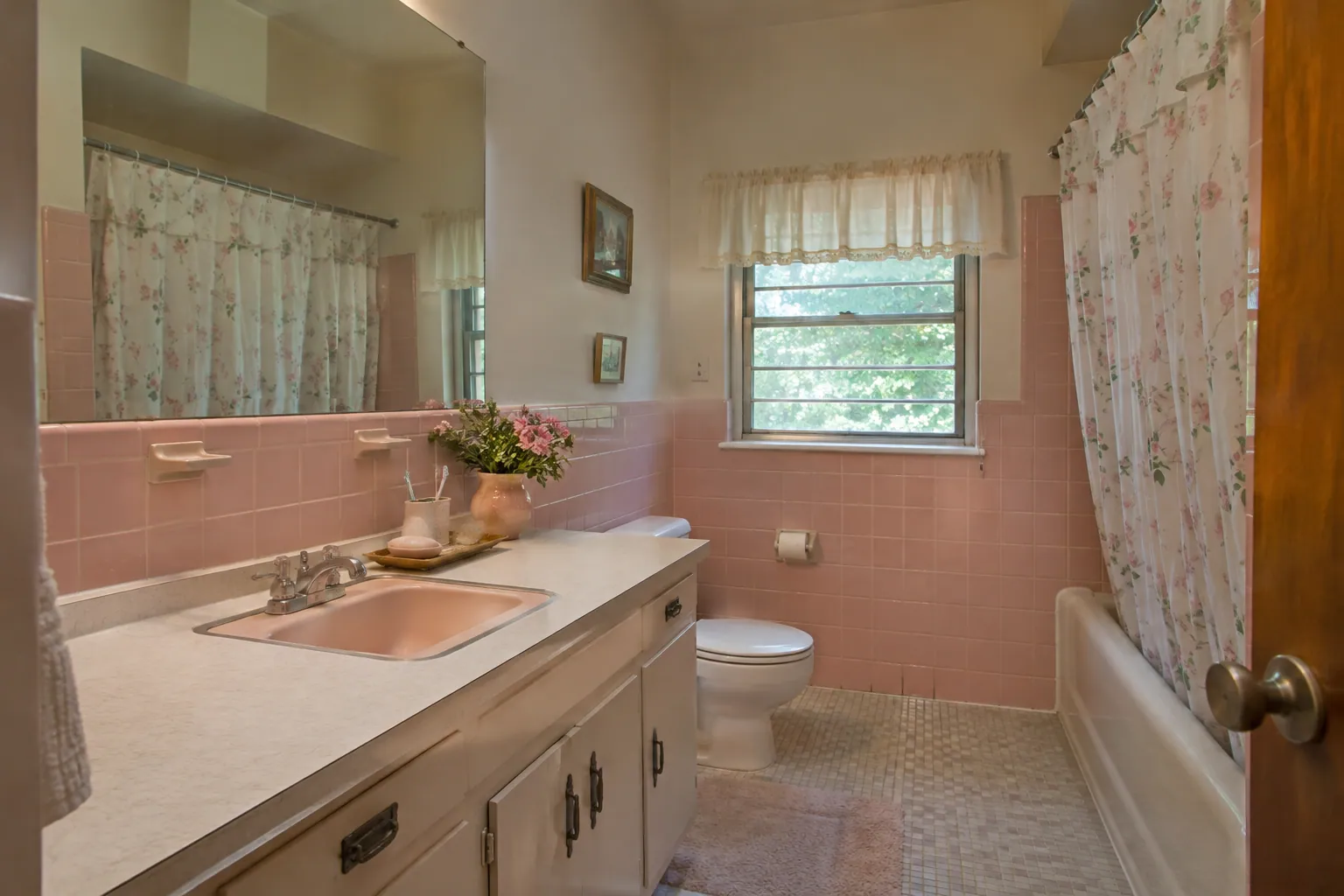
- An outdated color, such as the pink, mint or blue fixtures common in 1950s and 1960s baths
- Light surface wear on tile surrounds, depending on the product used
Refinishing, replacement and shower conversion compared
| Refinishing | Tub replacement | Tub-to-shower conversion | |
|---|---|---|---|
| Typical St. Louis cost | Often a few hundred dollars up to roughly $900 | Most projects land between about $4,000 and $10,000 with a wall system | Most projects land between about $5,000 and $12,000 |
| Typical time | About a day, plus cure time | Usually 1 to 2 days | Usually 1 to 2 days, longer if repairs are found |
| Expected life | Several years, depending on prep, use and cleaning | Many years, similar to a new tub | Many years, similar to a new shower |
| Fixes leaks or drains | No | Yes, access to the plumbing | Yes, access to the plumbing |
| Best for | Sound tub with a worn finish | Damaged tub, walls or drains, or a full refresh | Tubs rarely used, or step-over is a problem |
| Main limit | Surface only, can peel if prep is poor | Higher up-front cost | You lose the tub |
When refinishing makes sense
Refinishing earns its place when the tub is structurally good and you are not planning to touch the rest of the bathroom soon. A cast-iron tub with a worn finish is the classic case. Those tubs are heavy, often well over 300 pounds, and getting one out of a second-floor bath or a tight hall bath can mean breaking it up and carrying it out in pieces.
It also makes sense if you are selling in a year or two and want a cleaner look without a big spend, or if you are on a tight budget and the plumbing and walls are in good shape. In that situation a few years of good use from a refinished tub is a reasonable trade.
Before you commit, press on the tub floor and the wall around it. Look at the caulk line, the drain and the ceiling below if the bath is upstairs. If everything is dry, firm and clean, refinishing is on the table.

When replacement is the better call
Replacement is the better call when the problem is bigger than the finish. Refinishing over a failing tub is paying for paint on a problem that will keep growing.
Think about replacement if you see any of these:
- Soft or spongy spots in the floor near the tub, or a stained ceiling below
- Cracks in an acrylic or fiberglass tub, or rust coming through the bottom of a steel tub
- Loose, cracked or moldy tile around the tub, or walls that feel soft behind the surround
- A slow drain, a leaking overflow, or old galvanized or cast-iron drain lines you suspect are failing
- A tub that is hard to step over and you want something safer or easier to use
- A previous refinish that is peeling, which means the tub will need to be stripped and redone
What St. Louis homes add to the question
Our housing stock changes the math. In brick bungalows, ranches and split-levels built from the 1940s through the 1970s, the tub is usually the oldest thing in the bathroom and often sits against an exterior wall. Cold winters and humid summers mean that wall sees condensation and, if there is a leak, mold has a good place to grow.
Hard Missouri water matters too. Mineral buildup is tough on any finish, and the abrasive cleaners people use to fight it wear down a refinished surface faster than they wear down factory enamel or acrylic. If you refinish, plan on gentle, non-abrasive cleaners and a squeegee habit.
Replacement also gives access. Many older homes still have cast-iron or galvanized drain lines, and the tub trap and waste connections are only reachable when the tub is out. If the pipes are corroded, it is far cheaper to fix them during a tub swap than after you have finished a refinish or a new bath.
Plaster and tile walls are the other factor. Original ceramic tile in a 1950s bath is often still in better shape than the grout or the wall behind it. Cracks and loose tiles mean moisture has been getting in for years, and a new wall system is a more lasting repair than recoating the old one.
Cost, timeline and lifespan side by side
Prices in St. Louis vary with the size of the bath, the type of tub, access and what is found behind the walls. The ranges below are typical, not a promise, and your written quote is what counts.
Practical things to know before you choose
Refinishing needs a warm room and good ventilation. The products have strong fumes, and cold weather or heavy summer humidity can slow the cure. If you do it in January, make sure the bath can be kept at a steady temperature, and keep the tub dry for as long as the installer tells you.
Ask what the coating is, how many coats go on, how long before you can use the tub, and what warranty is in writing. Do not rely on a verbal promise. Also ask what prep includes, because the etching and repair work are what keep a refinish from peeling.
For replacement, ask whether the quote includes the wall surround, drain and overflow, any needed repairs to the subfloor or framing, haul-away of the old tub, and permits where required. In St. Louis County and many municipalities, plumbing work can call for a permit, and the rules differ by city, so it helps to have a contractor who knows the local office. Licensed and insured installers matter here, because a leak behind a wall is a problem you do not see until it is expensive.
Most tub and shower replacements are installed in one to two days, which is closer to refinishing than people expect. The main difference is the cost and what you get at the end.
A third option: change the tub into a shower
If the real issue is that nobody in the house takes a bath anymore, or stepping over a 15-inch tub wall is getting harder, neither refinishing nor a like-for-like replacement may be the right answer. A tub-to-shower conversion uses the same footprint, typically a 60-inch tub space, and swaps it for a low-threshold shower with a solid-surface or acrylic wall system.
That route often costs more than a simple tub replacement, but it can make the bathroom safer and easier to clean. In a small hall bath it is often the most useful change you can make. If you want to keep a tub for resale or for grandchildren, a replacement tub with a new wall system is the better path.
The bottom line
If you are still going back and forth, the easiest next step is to have someone look at the tub in person, or by video if that is simpler. We offer a free in-home or video design visit where we check the tub, the walls and the plumbing access, talk through what you actually want from the bathroom, and give you a measured written quote. If refinishing is the smarter move for your situation, we will say so. If replacement or a shower conversion fits better, you will see the numbers and the timeline on paper before you decide anything.