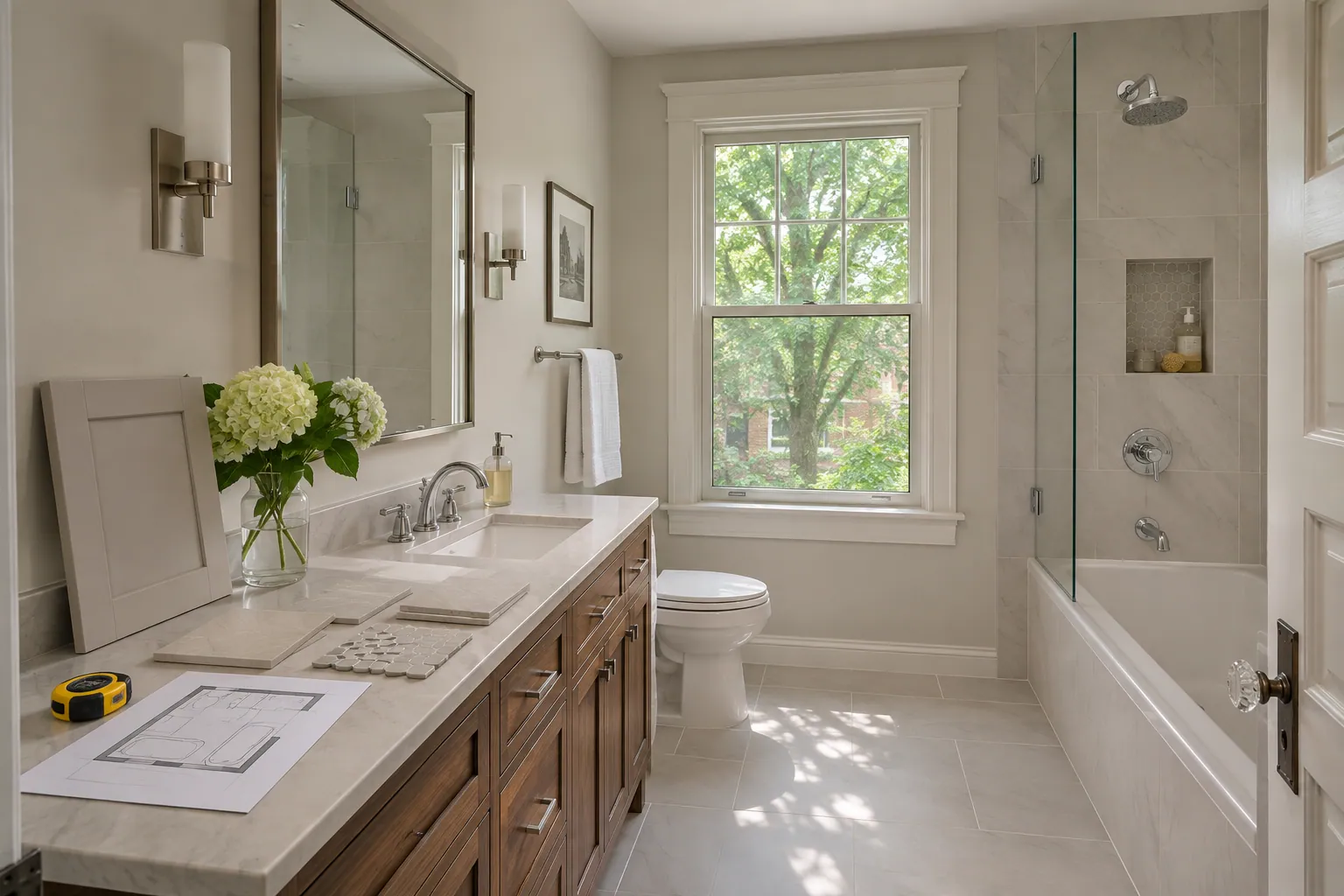
Choosing a bathroom remodeler in St Louis comes down to a few things you can check before anyone touches your house: who does the work, what is written down, and how they handle the surprises old homes tend to hold. This guide walks through what to ask, what to compare and what to walk away from. It is written for homeowners with brick bungalows, ranches and split-levels, where the bathroom is often the original.
Key takeaways
- Decide first whether you need a one-to-two-day tub or shower replacement or a full remodel, then look for a company that does that job every week.
- Ask who actually installs the work, and ask to see proof of insurance and any license your city or county requires.
- A good quote is measured, written and itemized, and it says what happens if the walls or floor hide a problem.
- Old St. Louis homes bring cast-iron drains, galvanized supply lines and plaster walls. A remodeler who plans for them up front saves you money and stress.
Start with the size of your project
Before you call anyone, be clear on what you want. A tub-to-shower conversion, a bathtub replacement or a walk-in shower swap is a different kind of job from gutting a bathroom and moving the toilet. The companies that do each one well are often set up differently.
Replacement work usually means a measured quote, a prefabricated or solid-surface wall system, and an install that most often wraps up in one to two days. A full remodel with tile, a new vanity, countertops and a layout change typically runs two to four weeks and involves more trades. Pick a company that handles your type of job regularly, not one that treats it as a side line.
If you are not sure which you need, say so. A good remodeler will tell you when a simple replacement solves the problem and when it does not. If the only answer you hear is the biggest, most expensive option, keep looking.
Choosing a bathroom remodeler in St Louis: the questions that matter
Skip the broad questions that every company answers the same way. These get you real information.
Ask them to describe a bathroom like yours that they finished recently. A 5x8 hall bath in a 1950s ranch has its own quirks, and so does a basement bath below the sewer line. You want to hear specifics, not a brochure.
- Who will be in my house, and are they your employees or subcontractors?
- Who is my single point of contact from the first visit through the final walkthrough?
- Do you do the design visit and the measuring yourselves, or does a salesperson guess and someone else corrects it later?
- What happens if you open the wall and find rot, old pipe damage or a bad subfloor?
- How do you protect floors, hallways and the rest of the house while you work?
- What is the warranty on the labor and on the products, and is it in writing?
Quote comparison checklist
| Item | What good looks like | Red flag |
|---|---|---|
| Measurements | Taken in your bathroom, in person or on a detailed video visit | Price given from a phone call or photos alone |
| Scope of work | Lists demolition, wall system, valve, drain, fixtures, trim and cleanup | One line with a total and no details |
| Permits | States who pulls them and whether the fee is included | Says permits are not needed without explaining why |
| Hidden damage | Explains how rot, bad drains or subfloor repairs are priced | No mention, or open-ended charges |
| Installers | Names who does the work and confirms they are licensed and insured where required | Cannot say who will be in your home |
| Payment terms | Deposit and progress payments spelled out | Large upfront payment with no schedule |
| Warranty | Labor and product coverage in writing | Verbal promises only |
Licensing, insurance and permits
Missouri does not license general contractors at the state level, so the rules come from your city or county. St. Louis City, St. Louis County, St. Charles County, Jefferson County and the Metro East towns in Illinois each handle things a little differently. Plumbing and electrical work is often subject to local licensing, and permits may be required when plumbing is moved or altered.
Do not rely on a verbal yes. Ask the company which permits your project needs, who pulls them and whether the price includes the fee. Then ask for a certificate of insurance showing general liability coverage, and workers' compensation if people will be working in your home. You can call the insurer to confirm the policy is active.
A reputable company will not hesitate on any of this. If someone tells you permits are not needed for work that clearly involves new plumbing, or suggests you pull the permit yourself as the homeowner to save time, treat that as a warning.
What a good written quote looks like
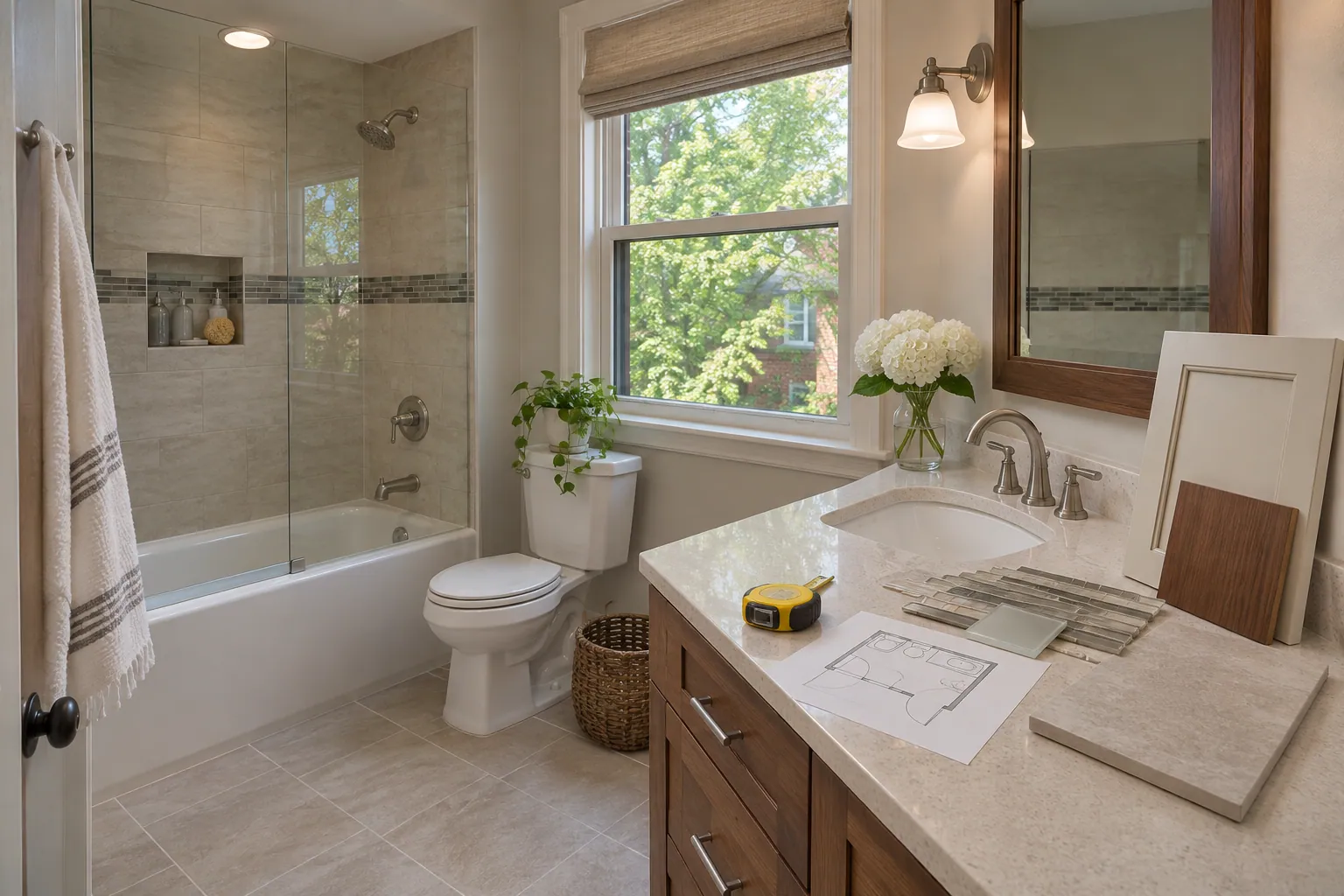
A quote should be based on measurements taken in your bathroom, either in person or by a careful video design visit. A number given over the phone or scribbled after a ten-minute look is an estimate at best, and the final price can drift.
Most shower and bathtub replacements in the St. Louis area typically land somewhere in the low-to-mid five figures, and full remodels vary widely with tile, fixtures and layout changes. Those ranges are only a starting point. The written quote for your bathroom is the number that counts.
When you compare quotes, compare the details, not just the total. The table below shows what to look for.
Plan for the house you actually have
Much of the St. Louis area was built between the 1940s and 1970s, and bathrooms from that era share a few traits. Original cast-iron tubs are heavy and often set in a framed alcove. Tile may sit over plaster or old lath rather than modern drywall. Drain lines can be cast iron that has corroded inside, and supply lines may be galvanized steel that has narrowed over decades of hard Missouri water.
None of this is a reason to panic, but a remodeler should talk about it before the job starts. Ask how they deal with removing a cast-iron tub, whether they inspect the drain and shutoff valves, and what they do when they find a soft subfloor. A company that has done this many times will have clear answers and a plan for how any extra work is priced.
Moisture matters here too. Humid summers and cold exterior walls in winter can cause condensation and mold behind old tile. The right wall system, proper waterproofing and a good exhaust fan are part of the job, not extras. Ask what they install and how it is vented to the outside, not into the attic.
Schedule, communication and cleanup
Ask for a start date, an expected finish and what could change it. For a shower or tub replacement, the plan should be simple: one visit to measure, a scheduled install, and a day or two on site. For a full remodel, ask for a rough sequence, such as demolition, plumbing and electrical rough-in, inspection, tile, fixtures and final trim.
Pay attention to how the company communicates before you sign. If calls go unanswered or the quote takes weeks, that is usually how the job will go. You want someone who returns messages and tells you the truth when a delay comes up.
Talk about daily routines, too. Will they shut off water overnight? Where will tools and debris go? How is dust contained? If this is your only bathroom, ask how you will manage while it is out of service. Small details like these separate a smooth job from a stressful one.
Red flags worth walking away from
Most problems show up early. A few patterns are worth taking seriously, especially when they appear together.
- Pressure to sign today because a discount expires tonight.
- A large deposit with no clear payment schedule tied to progress.
- No written quote, or a quote that lists only a total with no scope.
- Reluctance to share proof of insurance or to explain who does the installation.
- Reviews or photos that cannot be traced back to real projects or real addresses.
- Vague answers about permits, hidden damage or warranty terms.
Check references and past work the right way
Ask for a few recent customers you can contact, preferably in your part of town or with a house like yours. A short phone call about whether the crew showed up on time, kept the house clean and stood behind the work tells you more than a star rating.
Look at photos of finished bathrooms and ask which were done in the last year or two. Online reviews are useful, but read the middle ones, where people describe how problems were handled. Everyone has a bad day on a job. What counts is how the company responded.
Finally, trust your own read of the visit. You are letting a team into your home for days or weeks. The right company will explain things plainly, leave you with a written quote and give you room to decide.
The bottom line
If you are weighing your options, a free design visit is a low-pressure way to see how a company works. We can come to your home or meet by video, measure the space, talk through what your bathroom needs and give you a written quote you can compare at your own pace. You will hear plainly whether a one-to-two-day replacement fits or whether a fuller remodel makes more sense. Ask us anything on this list, including who does the install and how we handle older plumbing. Take the quote home, compare it, and call when you are ready.